
 Sometimes when I'm writing messages on my cell phone, I end up using -ize endings when I use predictive text. I sometimes wonder if people think that I don’t know the correct spelling for New Zealand English. Do they even know if it is wrong in New Zealand English?
I wonder if US English-style predictive text usage has a part to play in the confusion that surrounds whether to use -ise or -ize endings in New Zealand English. 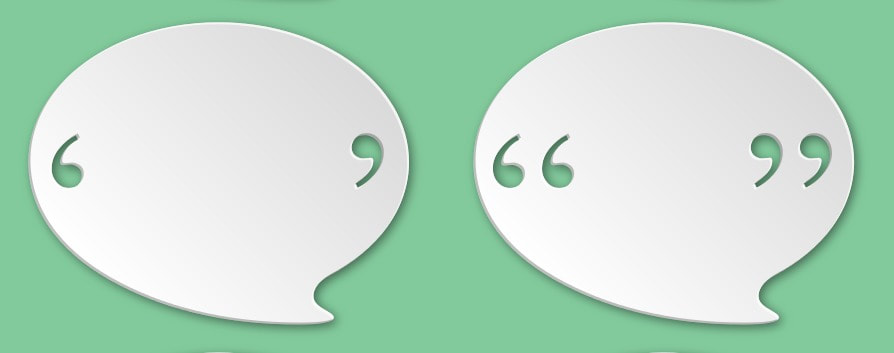 Quotation marks (also called quote marks, speech marks or inverted commas) are used to mark text that is dialogue or quoted material.
They can also be used for ‘scare quotes’ (see what I did there?) to show that a term is sarcastic, slang, a term that would not normally be used in that style of writing, or to isolate the term for attention. 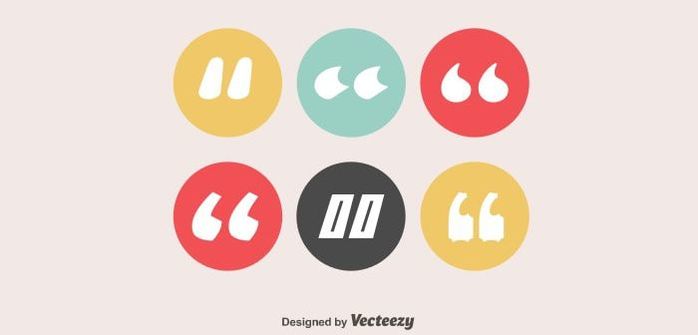 New Zealanders are exposed to a mix of American and British content, so we no longer know instinctively what is right for New Zealand English.
You wouldn't think it, but there's a difference in punctuation between these variations of English too. It's good to be consistent within a piece of writing (you're reader will unconsciously pick up on inconsistencies even if they don't know why), so it's helpful to know the rules. So, where does the punctuation go with quotation marks in New Zealand English? Just to make it confusing, there is a traditional answer and a modern answer.  Congratulations! You’ve done it. After months (or years) of hard slog and heartache, you’ve finished writing your book. You’ve got it as good as you can get it.
Now it is time to take to the next level. If you are self-publishing, the next step is to approach an editor to fine-tune and your manuscript and get it ready to send to the publisher or printer for design and typesetting. There are different types of editors, so make sure you understand which stage your book is at and which editor you need to speak to. Before you speak to an editor, there are a few things to keep in mind to make sure everyone is working to the same brief. Your editor will, no doubt, have more questions for you, and feel free to tell them more – every bit of information helps an editor get a feel for you and your writing.  How do you know which type of editing you need?
Many people think that editing is simply checking a written document for grammar and typos. Yes, this is part of what an editor does, but there are many more aspects to the editing process that need to be completed for a novel or document to be ready for printing. Not only are there more aspects to editing than just checking spelling, there are several levels (or stages) of editing. The lines can be a little bit blurred between the levels, and different countries or organisations define them slightly differently, but at each stage, the editor focuses on different details until the manuscript is ‘clean’ and ready for printing. When you are speaking to an editor about their services, make sure you know exactly what their service at each level will include. Don’t assume you are on the same page (so to speak).  As an author, you want to show your best work when you take your manuscript to a publisher or agent. Your story may be the next best seller, but to be noticed among the masses, it may help to have tidy manuscript – every detail counts. There are several formatting errors that many writers make when using Microsoft Word which are an easy fix if you know how.
Below are several common errors and how to fix them. Some of the errors are made as a result of the way things were taught in school and the remnants from days of typewriters, some are made as conventions have changed over the years and some are made just because.  Whether you are writing a novel, a business document or an academic paper, using Styles in your Microsoft Word document is the best and most time-efficient way to make a document look neat and consistent. The Styles 'codes' are applied to the various parts of the document for quick navigation and formatting. Using Word Styles means that all headings, text and spacing are consistent throughout the document, and any formatting change made on one page is automatically reflected in the rest of the document. The most exciting part at the end is making a table of contents with just a few clicks! Here are some basic, step-by-step instructions for adding Word Styles to your document. It can get a lot more complex, but this is a start which will make your document look tidier and more professional.  I still have my mother’s voice in my head from when I was little:
"It’s not ‘Me and Sally are going to the shops’, it's ‘Sally and I’." Whether we learn English as we are growing up, or learn it later in life, we learn the rules from the people around us. We are taught that it is rude to put yourself before someone else, and that you should say I. Me and I are two words that are often confused. It may be because of that voice in our heads from when we are young that we try not to sound rude or wrong, and then we over-compensate.  For many of my clients it is the first time they have hired an editor to have their writing proofread or copy-edited. Often they have never used or even heard of the Tracked Changes function in Word.
The Tracked Changes function is an editor’s best friend, but many people get a surprise when they get their document back with red and blue lines through it and are not sure what to do next. If you are one of these people, this is for you. |