
 What’s the time, Mr Wolfy?
Four o’clock ... or is it 4 pm? Or 4.00 p.m.? This was a game I played when I was young. But I never had to write it down. What if you did? How would you write it? It can be confusing when deciding how to write times and dates, especially with so many different ways of doing it.  Is it Charles' book or Charles's book?
And if the Jones family owns a house. Whose house is it? The Jones’s house, the Jones’ house, the Joneses house or the Joneses’ house? The rules for forming possessives (showing that something belongs to someone or something) are the same in all variations of English, but they can be confusing, so it's worth going over it.  Is it colour or color? Behaviour or behavior?
Most New Zealanders know that New Zealand English (NZE) uses colour and behaviour, following British English (BrE) spelling, whereas the the other variation is American English. So, are there any differences between NZE and BrE spelling? 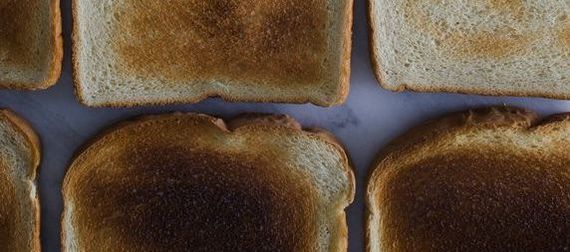 Is it 'I burned the toast' or 'I burnt the toast'?
What sounds the most natural to you? Is one more correct than the other? Does one sound more old-fashioned than the other? And, which one is correct for New Zealand English?  Sometimes when I'm writing messages on my cell phone, I end up using -ize endings when I use predictive text. I sometimes wonder if people think that I don’t know the correct spelling for New Zealand English. Do they even know if it is wrong in New Zealand English?
I wonder if US English-style predictive text usage has a part to play in the confusion that surrounds whether to use -ise or -ize endings in New Zealand English. 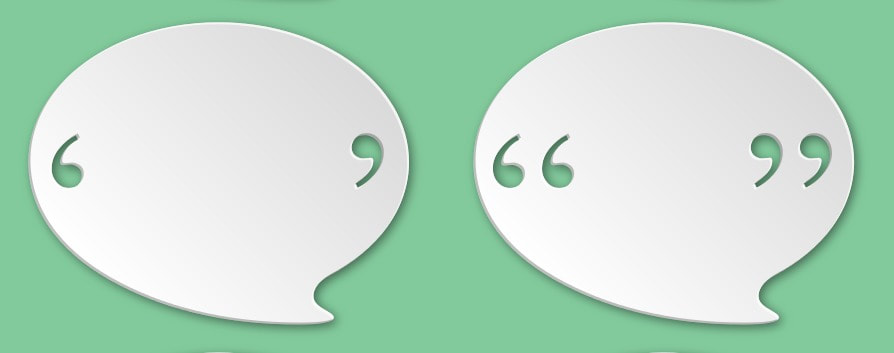 Quotation marks (also called quote marks, speech marks or inverted commas) are used to mark text that is dialogue or quoted material.
They can also be used for ‘scare quotes’ (see what I did there?) to show that a term is sarcastic, slang, a term that would not normally be used in that style of writing, or to isolate the term for attention.  New Zealanders are exposed to a mix of American and British content, so we no longer know instinctively what is right for New Zealand English.
You wouldn't think it, but there's a difference in punctuation between these variations of English too. It's good to be consistent within a piece of writing (you're reader will unconsciously pick up on inconsistencies even if they don't know why), so it's helpful to know the rules. So, where does the punctuation go with quotation marks in New Zealand English? Just to make it confusing, there is a traditional answer and a modern answer. |