

How to punctuate dialogue
Dialogue is notoriously complicated to punctuate, and many writers struggle to get it right. It also doesn’t help that there is a difference between New Zealand English and American English in the way dialogue is punctuated.
But readers will notice if you get it wrong (even if they can’t say why they think it’s wrong!).
Hyphens, en dashes and em dashes
Just like all punctuation, dashes provide information so that we can understand the intended meaning and nuances of a sentence.
Hyphens, en dashes and em dashes (also call en rules and em rules) all have different roles to play, but many people don’t know what they do – or have never noticed that there are actually three types of dashes. And it doesn’t help that only one is easily found on the computer keyboard.
How to write dates and times
"What’s the time, Mr Wolfy?"
"Four o’clock"
... or is it 4 pm? Or 4.00 p.m.?
"What's the time, Mr Wolfy?" was a game we played at primary school. But we never had to write it down. What if we did? How would we write it?
It can be confusing when deciding how to write times and dates, especially with so many different ways of doing it.
Possessives
Is it Charles' book or Charles's book?
And if the Jones family owns a house. Whose house is it? The Jones’s house, the Jones’ house, the Joneses house or the Joneses’ house?
The rules for forming possessives (showing that something belongs to someone or something) are the same in all variations of English, but they can be confusing, so it's worth going over it.
Is our spelling different?
Is it colour or color? Behaviour or behavior?
Most New Zealanders know that New Zealand English (NZE) uses colour and behaviour, following British English (BrE) spelling, whereas the the other variation is American English.
So, are there any differences between NZE and BrE spelling?
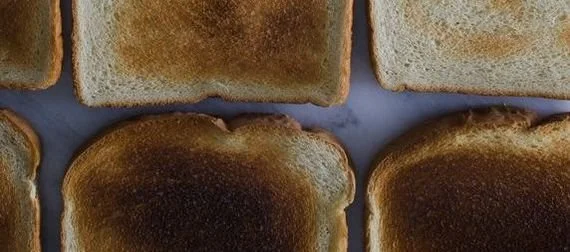
Burned vs Burnt
Is it 'I burned the toast' or 'I burnt the toast'?
What sounds the most natural to you? Is one more correct than the other? Does one sound more old-fashioned than the other?
And, which one is correct for New Zealand English?

Using Māori words in English text
The Māori language, or te reo Māori, is one of the three official languages of New Zealand.
We often use Māori words within English writing, but there are a few points to remember to ensure that the Māori language is used respectfully and correctly.
-ise vs -ize endings
Sometimes when I'm writing messages on my cell phone, I end up using -ize endings when I use predictive text. I sometimes wonder if people think that I don’t know the correct spelling for New Zealand English. Do they even know if it is wrong in New Zealand English?
I wonder if US English-style predictive text usage has a part to play in the confusion that surrounds whether to use -ise or -ize endings in New Zealand English.
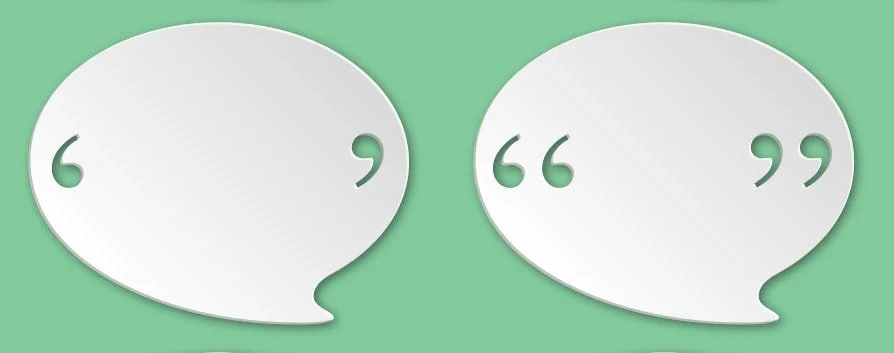
Single or double quote marks?
Quotation marks (also called quote marks, speech marks or inverted commas) are used to mark text that is dialogue or quoted material.
They can also be used for ‘scare quotes’ (see what I did there?) to show that a term is sarcastic, slang, a term that would not normally be used in that style of writing, or to isolate the term for attention.
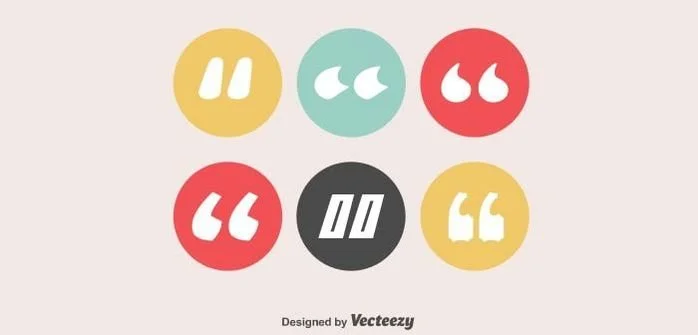
Punctuation inside or outside quotation marks?
New Zealanders are exposed to a mix of American and British content, so we no longer know instinctively what is right for New Zealand English.
You wouldn't think it, but there's a difference in punctuation between these variations of English too. It's good to be consistent within a piece of writing (your reader will unconsciously pick up on inconsistencies even if they don't know why), so it's helpful to know the rules.
So, where does the punctuation go with quotation marks in New Zealand English?

How to write a non-fiction book that sells
Writing a non-fiction book for your business, or to share a message or an interest, can be a daunting process.
You know that want to share your knowledge, but if you have never written a book before, you might not know how to begin. Where do you start?
Read on.
It’s not as quick and easy as some would have you think, but you can do it.

Tips on how to write a book to promote your business
Social media, networking and email subscription have long been on everyone’s marketing plan. Publishing a book is now the trend.
Many successful businesses have launched their business, or grew their business, by publishing a book.
How?

Copyright and permissions in New Zealand
‘What if I share my writing with someone else? What happens if they steal my idea?’
I get asked this all this time. It's natural for writers to be protective of their work.
But are these writers’ concerns warranted?
How much does editing cost?
“Can you give me a quote?”
This is one of the first questions I am usually asked by a potential client.
And rightly so.
A writer will most likely have a budget to work within, and they may want to compare the fees of several editors.
Unfortunately, I can’t just give you a flat rate as a response.
How to self-publish your book in New Zealand
There are different ways to get your book published (that's a whole other topic!). But once you have made the decision to self-publish your book, there are more decisions to make.
Will you make print copies or e-books? Or both?
Will you use a local designer and printer, or one of the many platforms to create your book yourself?
Which platform should you use?
Will you print many books and hope they sell, or will you print only as they are ordered?
It can be overwhelming.
So, let’s break it down.

When is my book ready for publishing?
“I have written my book and done a spell check. Is my book ready for publishing?”
Well, you can publish it now. In this age of self-publishing, you can publish anything. Nothing is stopping you from uploading it onto Amazon or other e-book sites and putting it out there.
But you'll want people to want to read it. And you want your book to sell. Or you might want an agent to offer you a contract.
If you do, then the answer is most likely no.

Types of editing
How do you know which type of editing you need?
Many people think that editing is simply checking a written document for grammar and typos. Yes, this is part of what an editor does, but there are many more aspects to the editing process that need to be completed for a novel or document to be ready for printing.

5 things to tell your editor
Congratulations! You’ve done it. After months (or years) of hard slog and heartache, you’ve finished writing your book. You’ve got it as good as you can get it.
Now it is time to take to the next level.
Me, myself and I
Me and I are two words that are often confused. It may be because of that voice in our heads from when we are young that we try not to sound rude or wrong, and then we over-compensate.
The revision and editing process
After months (or sometimes years) of putting everything into writing your book, it would be tempting to finish, hit save, and never look it again, hoping it's perfect. But not even the most experienced authors can do that.
There is still a lot of work to do between writing the final word and having the book on the shelf.
Recently, there seems to be a rise in the number of people preferring to self-publish their books. But if you've never written, let alone published, a book before through a traditional publisher, you may not be aware of all the steps (or how to do them) that go into publishing a book.
So, what do we need to do to make our book the best it can be?