
Should you use the Oxford comma?
Do you have strong views on whether to use the Oxford comma? It's one punctuation mark that can be very divisive.
Some are for it: why wouldn’t you want to make sure your writing is never ambiguous?
And others are dead against it: why add more commas when you don’t need them – it looks messy!

How to write bullet lists
When you write content, your goal is to grab and hold the attention of your audience, and to make your content quick and easy to read and understand.
One technique to make content easier to read and scan is to use bullet lists.
Bullet lists are displayed lists (rather than in-line lists) that remove all the nonessential words, leaving the important words and information available quickly and easily.
How to use a semicolon
I always feel like the semicolon is one of the more sophisticated punctuation marks. But that it also that it scares people a little.
It tends to be used more in formal writing, but it has its place in fiction too. It can be very useful to subtly convey a relationship between two thoughts without using more words.
And there is no need to fear it if you know how to use it correctly.
The ‘singular they’
When the student got to school, they realised they had forgotten their lunch.
There are three examples of the singular they in that sentence. Did you notice? Would you have written it any other way?

When to use italics
Italic font was first used in presses in Italy the 1500s and was designed to replicate the handwritten manuscripts of the time. Italic font was used differentiate informal manuscripts created for leisure reading from formal manuscripts, which used Roman font. It wasn’t until the sixteenth century that italic font was used for emphasis.
How to write numbers
We all know the rhyme 1, 2, buckle my shoe. 3, 4, knock on the door.
Or should it be One, two, buckle my shoe. Three, four, knock on the door?
Though a reader might not be conscious of it, if numbers are not formatted correctly and consistently, your writing will look unprofessional. This article is about how to make numbers and numerals in formal and informal writing consistent and easy to read in New Zealand English writing.
How to write abbeviations
We use abbreviations and acronyms every day without thinking about them, and we instantly know the meaning of many of them – like FAQs, ETA, IQ, DVDs. And today's text language is full of them, LOL (or lol if you are of the younger generation).
It can be confusing to write abbreviations and acronyms correctly, and as there are only small style variations, it doesn’t always look wrong to use one or the other.

How to punctuate dialogue
Dialogue is notoriously complicated to punctuate, and many writers struggle to get it right. It also doesn’t help that there is a difference between New Zealand English and American English in the way dialogue is punctuated.
But readers will notice if you get it wrong (even if they can’t say why they think it’s wrong!).

Hyphens, en dashes and em dashes
Just like all punctuation, dashes provide information so that we can understand the intended meaning and nuances of a sentence.
Hyphens, en dashes and em dashes (also call en rules and em rules) all have different roles to play, but many people don’t know what they do – or have never noticed that there are actually three types of dashes. And it doesn’t help that only one is easily found on the computer keyboard.
How to write dates and times
"What’s the time, Mr Wolfy?"
"Four o’clock"
... or is it 4 pm? Or 4.00 p.m.?
"What's the time, Mr Wolfy?" was a game we played at primary school. But we never had to write it down. What if we did? How would we write it?
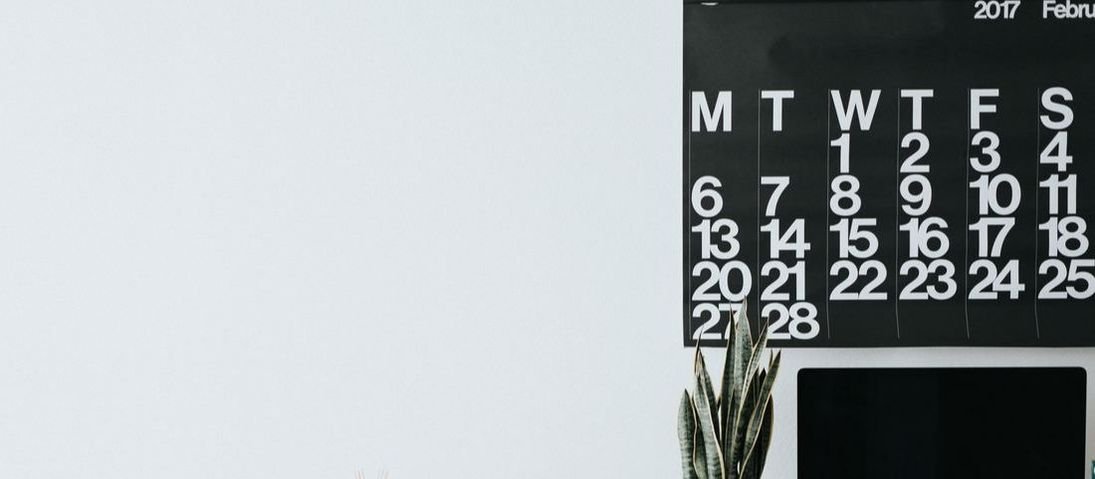
It can be confusing when deciding how to write times and dates, especially with so many different ways of doing it.
Possessives
Is it Charles' book or Charles's book?
And if the Jones family owns a house. Whose house is it? The Jones’s house, the Jones’ house, the Joneses house or the Joneses’ house?
The rules for forming possessives (showing that something belongs to someone or something) are the same in all variations of English, but they can be confusing, so it's worth going over it.
Is our spelling different?
Is it colour or color? Behaviour or behavior?
Most New Zealanders know that New Zealand English (NZE) uses colour and behaviour, following British English (BrE) spelling, whereas the the other variation is American English.
So, are there any differences between NZE and BrE spelling?
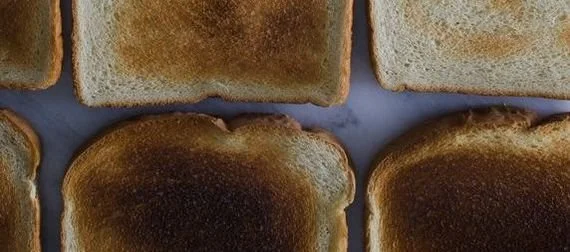
Burned vs Burnt
Is it 'I burned the toast' or 'I burnt the toast'?
What sounds the most natural to you? Is one more correct than the other? Does one sound more old-fashioned than the other?
And, which one is correct for New Zealand English?

Using Māori words in English text
The Māori language, or te reo Māori, is one of the three official languages of New Zealand.
We often use Māori words within English writing, but there are a few points to remember to ensure that the Māori language is used respectfully and correctly.
-ise vs -ize endings
Sometimes when I'm writing messages on my cell phone, I end up using -ize endings when I use predictive text. I sometimes wonder if people think that I don’t know the correct spelling for New Zealand English. Do they even know if it is wrong in New Zealand English?
I wonder if US English-style predictive text usage has a part to play in the confusion that surrounds whether to use -ise or -ize endings in New Zealand English.
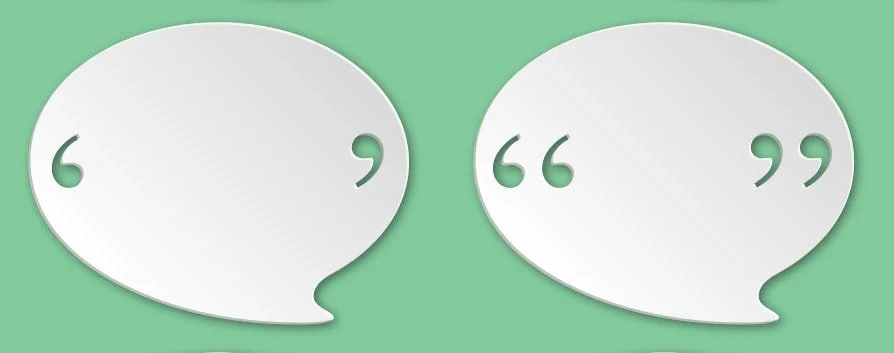
Single or double quote marks?
Quotation marks (also called quote marks, speech marks or inverted commas) are used to mark text that is dialogue or quoted material.
They can also be used for ‘scare quotes’ (see what I did there?) to show that a term is sarcastic, slang, a term that would not normally be used in that style of writing, or to isolate the term for attention.
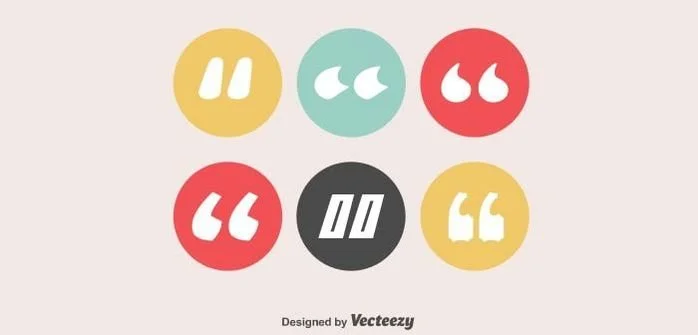
Punctuation inside or outside quotation marks?
New Zealanders are exposed to a mix of American and British content, so we no longer know instinctively what is right for New Zealand English.
You wouldn't think it, but there's a difference in punctuation between these variations of English too. It's good to be consistent within a piece of writing (your reader will unconsciously pick up on inconsistencies even if they don't know why), so it's helpful to know the rules.
So, where does the punctuation go with quotation marks in New Zealand English?